
Pre-Connectorized Fiber vs. Traditional Field Termination: A Guide for the Modern Network
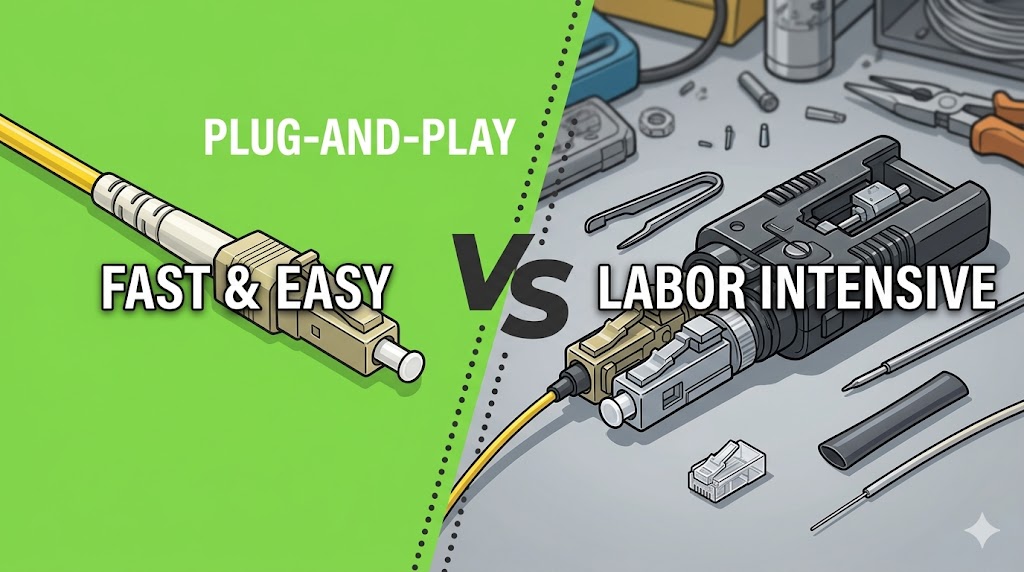
In today's fast-paced digital world, building a reliable and efficient network is more critical than ever. Whether you're a telecommunications provider, an IT professional, or a do-it-yourself enthusiast, the choice of fiber optic cable can significantly impact your project's cost, time, and performance. One of the key decisions you'll face is whether to use pre-connectorized fiber or traditional field termination methods like mechanical connectors, Splice-On connectors or Fuse-on fiber pigtails.
Pre-connectorized fiber, as found at New Tech Industries, comes with factory-terminated connectors on both ends. This means the connectors are applied in a controlled factory environment using automated processes, ensuring consistent quality and performance. On the other hand, traditional field termination involves buying bare fiber optic cable and attaching connectors on-site using specialized tools. Let's delve into the advantages of Pre-connectorized fiber over these traditional methods.
Advantages of Pre-Connectorized Fiber
- Time Savings and Efficiency: One of the most significant benefits of pre-connectorized fiber is the dramatic reduction in installation time. Since the connectors are already installed, there's no need for on-site connectorization, which can be a time-consuming and meticulous process. This allows for faster deployment, enabling you to get your network up and running quickly.
- Consistent Quality and Performance: Pre-connectorized fiber undergoes rigorous testing in the factory to ensure each connector meets strict performance standards. The factory environment eliminates variables like dust, humidity, and human error that can affect the quality of field-terminated connectors. This results in consistent insertion loss and return loss, which are crucial for reliable data transmission.
- Simplified Installation: Installing pre-connectorized fiber is much simpler than traditional methods. It reduces the need for specialized tools and highly skilled technicians, making it accessible to a broader range of installers. This simplification also leads to fewer installation errors, as there are fewer steps and potential points of failure.
- Reduced Labor Costs: While pre-connectorized fiber may have a higher initial material cost, the significant time savings and simplified installation can lead to substantial labor cost reductions. With fewer man-hours required for installation, you can allocate resources more effectively and complete projects more efficiently.
- Enhanced Reliability and Durability: The factory-terminated connectors on pre-connectorized fiber are designed for durability and can withstand the rigors of installation and long-term use. This enhanced reliability reduces the risk of network downtime and the need for costly repairs.
When to Consider Traditional Field Termination
While Pre-connectorized fiber offers numerous advantages, there are situations where traditional field termination might be a viable option:
- Custom Lengths: Traditional field termination allows for precise length adjustments on-site, which can be useful when dealing with tight spaces or complex routing.
- Cost-Effectiveness for Small Projects: For very small projects with a limited number of connections, the initial material cost of Pre-connectorized fiber might be higher than traditional methods.
- Specialized Applications: In some cases, specialized connectors or fiber types might not be readily available in pre-connectorized formats.
Conclusion
In conclusion, pre-connectorized fiber offers a compelling set of advantages over traditional field termination methods, including significant time savings, consistent quality, simplified installation, reduced labor costs, and enhanced reliability. While traditional field termination still has its place in certain situations, pre-connectorized fiber is often the preferred choice for modern network deployments where speed, performance, and efficiency are paramount. Consider pre-connectorized fiber from New Tech Industries for your next network project to experience these benefits firsthand.